
5 min read time
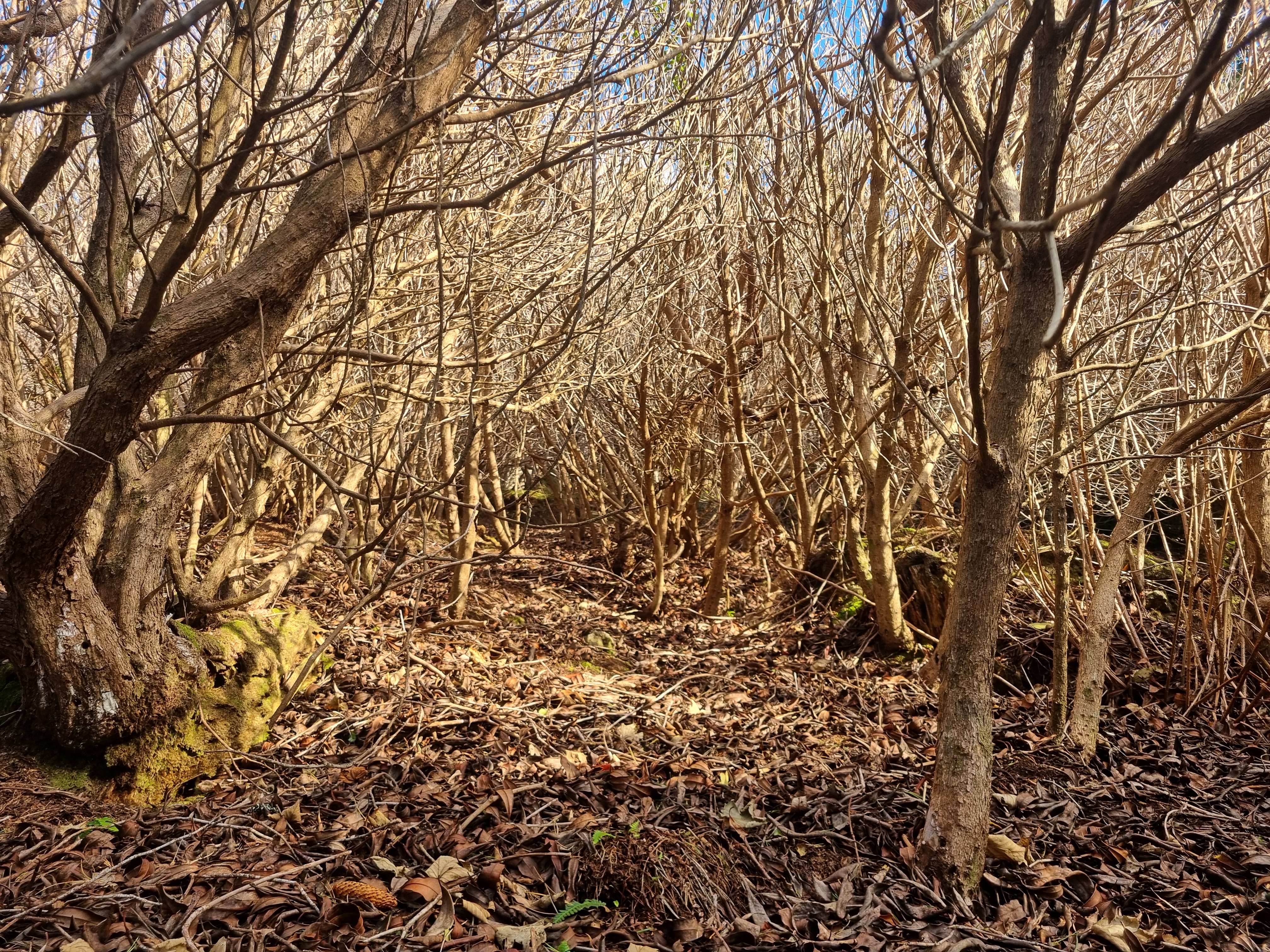
Give an inch, and they’ll take a mile is not lost Rhododendron Ponticum, which covers 300 hectares Raasay–that’s 5% of Raasay. Last October, the island started reclaiming its land from this dark and shady plant takeover. One year on, here’s a recap and update of the progress that’s been made.
Carbon Neutral Islands Raasay started this project in response to the people of Raasay wanting to encourage and protect the islands biodiveristy and carbon rich envrioments, as part of creating our Community Climate Action Plan. Investigating how to go about this, we spoke to experts both locally and further afield, and soon Rhododendron Ponticum was in the headlights. A toxic plant that can double its footprint every twenty years; it’s been identified as one of the biggest threats to our rainforests; engulfing our native plants and wildlife, all the while being immune to grazing. It really is a trifecta.
What is the extent on Raasay?
As colour came back to the island in spring 2024, CNI launched an island-wide survey of rhododendron. Local ecologists were drafted in to do this job, walking the island and using drones to map the spread. The results: 300 hectares, or around 5% of Raasay’s total land mass. Now remember, rhododendron can double its footprint every 20 years. That tells us in eighty years, 80% of the island could be covered, if left unchecked.[1] We realised what we’re dealing with isn’t just a plant with pretty purple flowers, but an enormous threat to Raasay’s biodiversity.
While an island covered in Rhodos does sound like a den-building heaven, Raasay is home to a rich environment, including nationally rare plants and globally rare habitats such as temperate rainforest, which are full of life. This includes the Raasay vole, a subspecies found nowhere else on Earth, unique to this island. It’s our flora and fauna that pay the price for the invasion. Beyond the ecological impact, rhododendron takes up land that could be used for other purposes, such as development, grazing or simply enjoying.
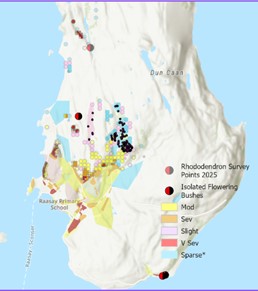
There’s a lot of rhodos, and it’s spreading – so what now?
Pandora’s box has been opened, and the dark shade of rhododendron is encroaching. Where might we find our solution? We found our light in through discovering a contemporary approach—stem treatment, which uses hand tools to make an incision at the base of the plant and applies a small amount of herbicide. This method is accessible and minimally intrusive to the surrounding environment. Ideally, no herbicide would be used; however, given the scale and speed of spread, it’s required for effective treatment.
Instead of outsourcing, we wanted to extend the opportunity to the people who live here. CNI offered training to locals, and in October 2024, a local team formed and began treating Rhododendron Ponticum on behalf of RHCC at Oscaig Woods. In January, the team moved onto works for CNI, bringing the rhododendron line back to around the heartland of Inverarish. The local team have been reaching many of the lesser-trodden parts of Raasay, through all types of weather, often miles from the nearest road – and while the views are good, it’s not always glamorous.
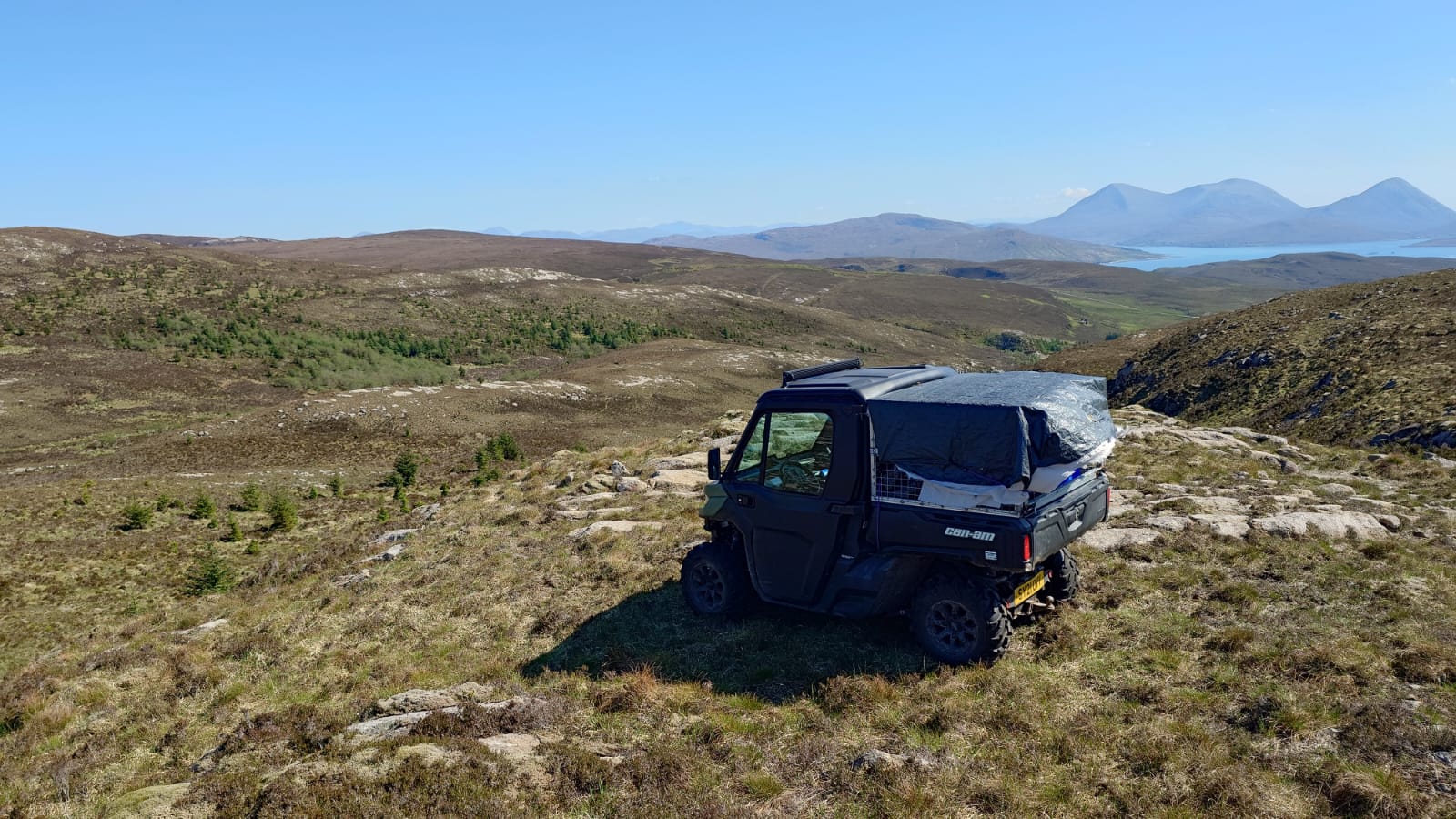
Progress so far
As of December 2025, over 160 hectares have been treated – which is over halfway! That’s equivalent to over 300 football fields. The team have proven their methods effective, with clearance rates consistently over 90%, and in some sites achieving over 95%. The project has provided work for three to five local contractors in both a full-time or part-time capacity. Having people who know the land has shown that communities are well placed to be at the heart of this kind of work, delivering results that are both technically effective and cost-effective.
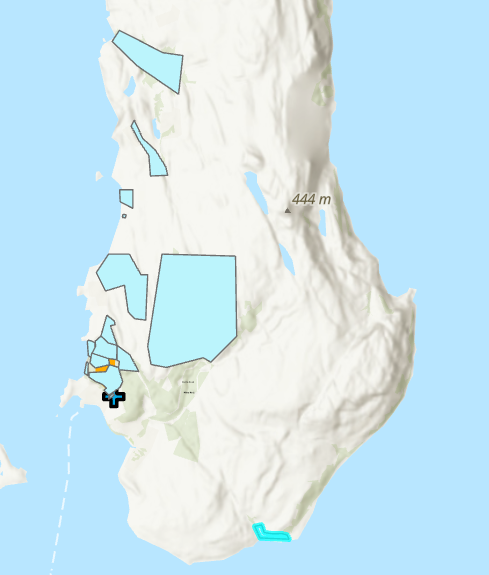
At the moment, the team is working in and around the forestry sites surrounding Inverarish, where some of the most severe thickets are found. A partnership with Forestry and Land Scotland has been established, enabling us to partially-fund removing rhododendron from their land as well. Work around Burma Road is next. Alongside the rhododendron, we’ve Japanese knotweed control around the Heritage Trust’s land this year as a trial. .
Treated areas with light infestation will be able to naturally regenerate; however, sites with dense rhododendron may need active work to regenerate, such as planting native species. The University of Tennessee is studying sites across Raasay to measure the biodiversity and carbon impacts of rhododendron removal – research that will provide evidence for similar projects elsewhere.
Where to from here?
Effective control is a long game and requires light-touch follow-up. Next year we intend to pick up knotweed treatment at a wider-scale deployment and look at other invasives such as Bracken. And invasive plants are only one part of a bigger picture.
The work doesn’t have to end here – As one resident put it: “I’d love to see this work expand into the roles of community rangers – people employed to serve the island’s ecological and peoples needs, whether that’s invasive species control, tree planting, or creating paths.” There’s potential for creating a longer-term dedicated service for Raasay – employment that serves the people and the land, making the place more resilient. Raasay has recently been identified by the Scottish government as a priority area for rainforest restoration. This presents further opportunities to fund work like this, if the community wants it to continue, in a way that form makes sense for Raasay.
To show the methods and different ways to control rhododendron, we’re planning an open day in the New Year. Keep an eye out for an update on when this will take place!
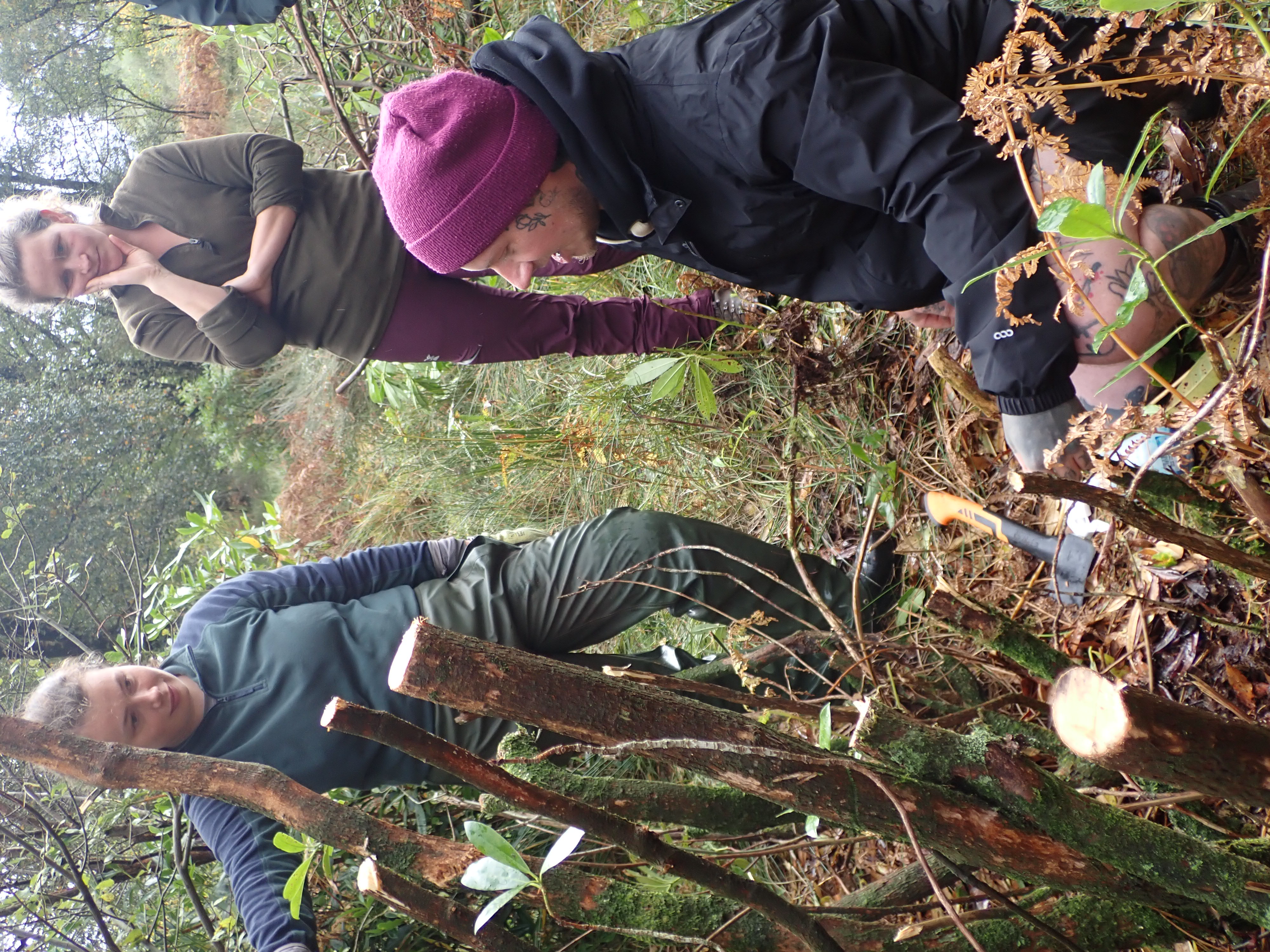
The progress made so far has come from the community – from the dedicated local contractors keen to see rhododendron removed from the island, to landowners and managers granting access, from community groups to the CNI steering group. Thank you for your support. Feel free to share this article around your networks. If you have any questions, you can reach me on tom@raasaydevelopmenttrust.org
[1] Hypothetically, this could be the case; however, some parcels of land may not be susceptible to rhododendron, or others may be more susceptible. Particularly sites which are clear felled
Find out more about Raasays plants – https://skyeraasayplants.wordpress.com/
Leave a Reply