
by Tom Lusink
28 August 2024
A Beautiful Killer on Raasay
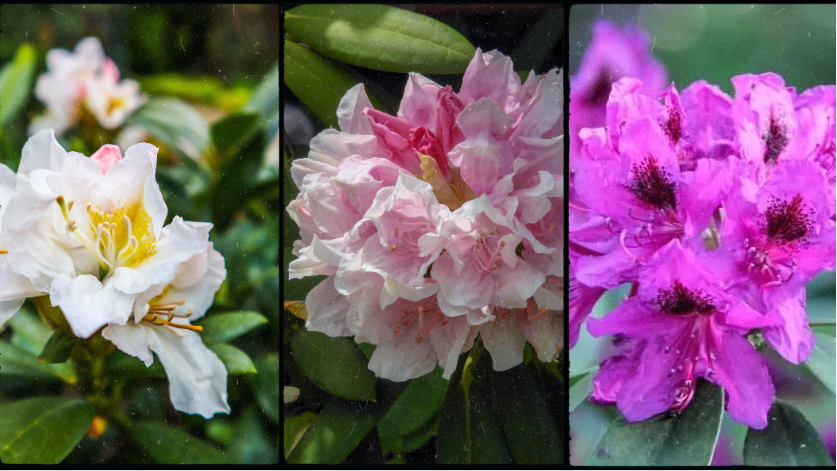
The stunning pink and lilac flowers of Rhododendron Ponticum (referred to as Rhododendron) mean the beginning of summer here on Raasay. A time when the island comes to life. And not just the plants, but the influx of people looking to visit the island or those seeking work here for the summer.
While the beauty of this plant cannot be denied, are we living with a not-so-secret killer? Introduced to the UK in the mid-18th century, plant-obsessed Victorians soon planted it around the country. It is a plant that symbolises empire and globalisation.
Year-round thick, green waxy leaves, coupled with stunning flowers, made it a match made in heaven for large estates, being used as shelter belts for game, to mark boundaries, or just as an ornamental. It didn’t take long to become a common sighting in people’s gardens.
Overview of Rhododendron Ponticum
There are over 900 varieties of Rhododendron, but only the hybridised Ponticum variety spreads so prolifically.
- Rhododendron Ponticum is classified as an invasive species due to its aggressive growth.
- Native to isolated regions in Spain, Portugal, and the Black Sea, where it grows sparingly.
- The hybridised variety now thrives in:
- Wet and mild climates, particularly those found on the west coast of Scotland.
- Acidic soil conditions, which are common in this region.
On Raasay, like many parts of the west coast of Scotland, Rhododendron Ponticum has become a widespread presence, overtaking much of the natural landscape.
Every 20 years left untreated, the cost to tackle this invasive species doubles.
What Impact Does Rhododendron Ponticum Have?
The spread of Rhododendron Ponticum creates a chain reaction of ecological damage:
- Initial Growth: An isolated Rhododendron bush may not seem problematic at first.
- Dense Clumps Form: As these bushes multiply, they form thick, dense clusters.
- Light Blockage: The dense canopy prevents sunlight from reaching the ground, halting other plant growth.
- Leaf Litter Accumulation: Thick layers of leaf litter accumulate, further stifling plant growth.
- Soil Acidification: Over time, the soil becomes more acidic, creating inhospitable conditions for other plants.
- Creation of Dead Zones: This results in “dead zones” where no other plants can seed or thrive, effectively displacing native plants and animals.
Exponential Spread
As bushes mature, the amount of seeds produced increases exponentially. Coupled with the right conditions, this leads to vigorous spreading akin to a runaway train.
The bright lilac flowers of Rhododendron Ponticum release thousands of seeds that can spread hundreds of metres. As seen on parts of Raasay, a monoculture of Rhododendron takes over, colonising land that could otherwise be used.
Additional Rhododendron problems include:
- Hosting pathogens (such as Phytophthora) that cause diseases.
- Damaging aquatic ecosystems near rivers and streams, even impacting fish numbers.
- Being poisonous to livestock (herbivores) and honey bees, making them immune to grazing pressure.
A Subversive Threat to Biodiversity
The plants and trees that disappear are only the tip of the iceberg of the damage caused by Rhododendron. Think about the little bird that made its home on the arm of the now-gone birch, or the vole that relied on the hazel nuts for food.
Life relies on life.
Humans, for example, rely on bacteria living in us, which outnumber the amount of living cells. Similarly, plants do not grow in isolation. Nearly all plants rely on symbiotic relationships with fungi, bacteria, and other organisms. Like all quality relationships, these take time to develop—thousands of years in these cases. Without one, the other collapses, causing an ecological clearance.
“There will be places that are overrun by Rhododendron, and those that overcome it. It’s not hard to imagine Raasay being one big Rhododendron bush in 100 years!” said a woodland ecologist on their visit to the island.
Raasay’s Rich Environment
Raasay’s varied landscape makes it a biodiverse place, with areas designated as Sites of Specific Scientific Interest. Over 3600 species are recorded here and we even have our very own rainforest! A Temperate Rainforest or the Celtic Rainforest, which is a globally rare and important habitat. Rhododendron is classed as one of the biggest threats to its survival.
The island also has a rich cultural heritage. Gaelic poet Sorley MacLean, who was a great communicator of natural wonders, comes from the island.
Rhododendron Impact on Carbon Emissions
Beyond being a biodiversity catastrophe, Rhododendron is bad news for our carbon balance. Raasay’s peatlands, its largest emission source, are further degraded by the spread of Rhododendron, releasing more greenhouse gas emissions.
The island’s forests, which use carbon to grow, are the island’s biggest carbon sequestering mechanism. Again, Rhododendron threatens these.
A Solution That Does More Than Just Tackle the Rhododendron Invasion
The solution? Paying locals to remove Rhododendrons in winter months.
Tackling Rhododendron can offer:
- Employment when seasonal work dries up.
- Community-led efforts to take ownership of the problem.
Communities like Knoydart have nearly eradicated Rhododendron and have been at it for years. The same steady, long-term approach is needed on Raasay, involving local residents rather than external contractors.
Effective Control Methods: When Less Is More
Traditional methods like “cut and burn” often involve heavy equipment, chemicals, and fires. While this can deliver visible results, it’s often ineffective without follow-up treatment.
Stem Treatment or ‘Drill and Drop’ Approach
This technique involves applying a small, targeted amount of herbicide directly to the stem of the plant. With minimal equipment—just an axe or cordless drill—high success rates can be achieved. This method is well-suited for the winter months, plugging the island’s employment gap.
What’s Happening on Raasay?
Rhododendron removal is only the first step in a larger plan to restore and protect Raasay’s habitats. Ecologists from Great Glen Ecology and Tracks Ecology have been assisting with ground and aerial surveys using drones and machine learning.
If a £75k funding application is approved, work will begin this year.
A Call to Action
As a community, we can either allow this ecological disaster to unfold, or we can take ownership and protect what is valuable to us while providing opportunity.