
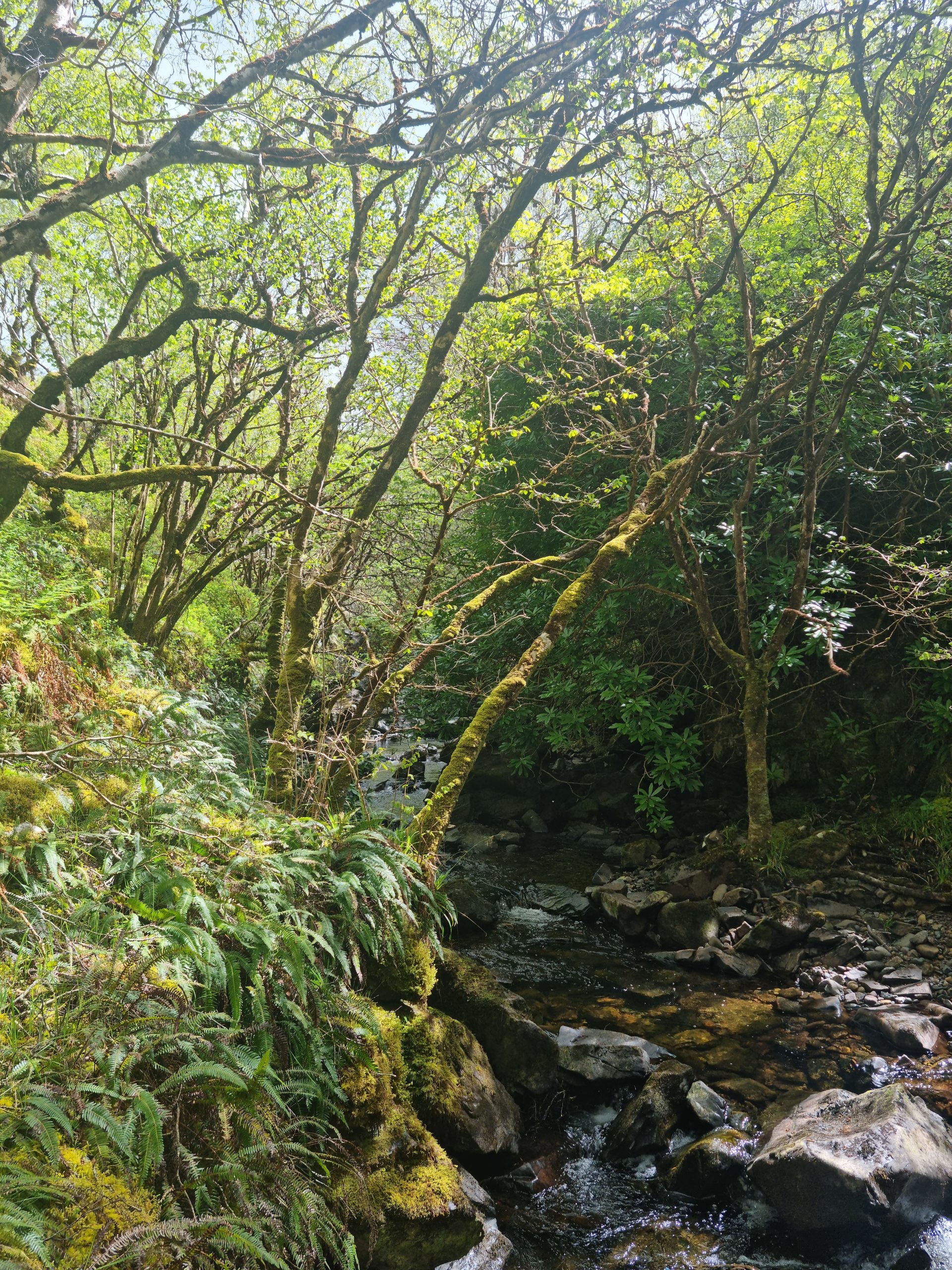
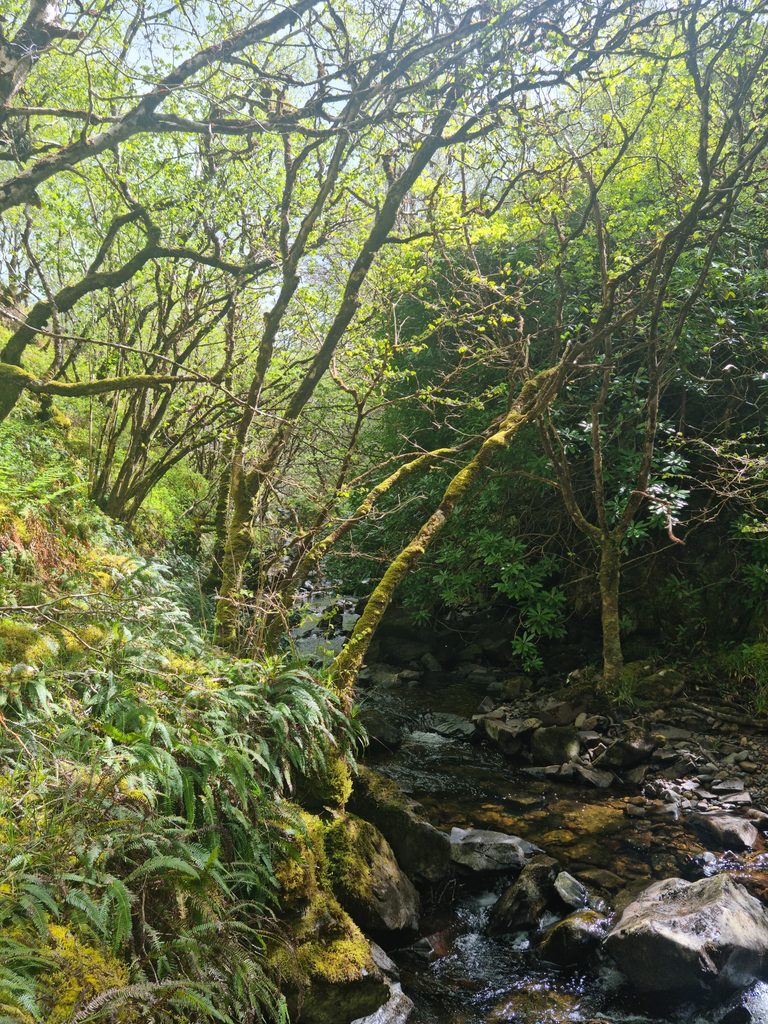
The first phase of this work has just finished, after nearly three years of hard graft. Thanks to our team of contractors. Alongside creating local work, the team have helped support biodiversity and island wildlife across more than 176 hectares. As native woodland grows back on the cleared land, it is expected to take around 16,000 tonnes of carbon dioxide (CO₂) out of the air over the next 50 years.
This project came from one of the top actions in the Community Climate Action Plan we put together a few years ago. As well as being a community priority, we soon found that tackling invasive plants like rhododendron is one of the most effective things we can do to help Raasay reach net zero by 2040, which is what we’re all about! So we applied for another round of funding to continue the project, and we were successful.
But how does removing a bush actually help?
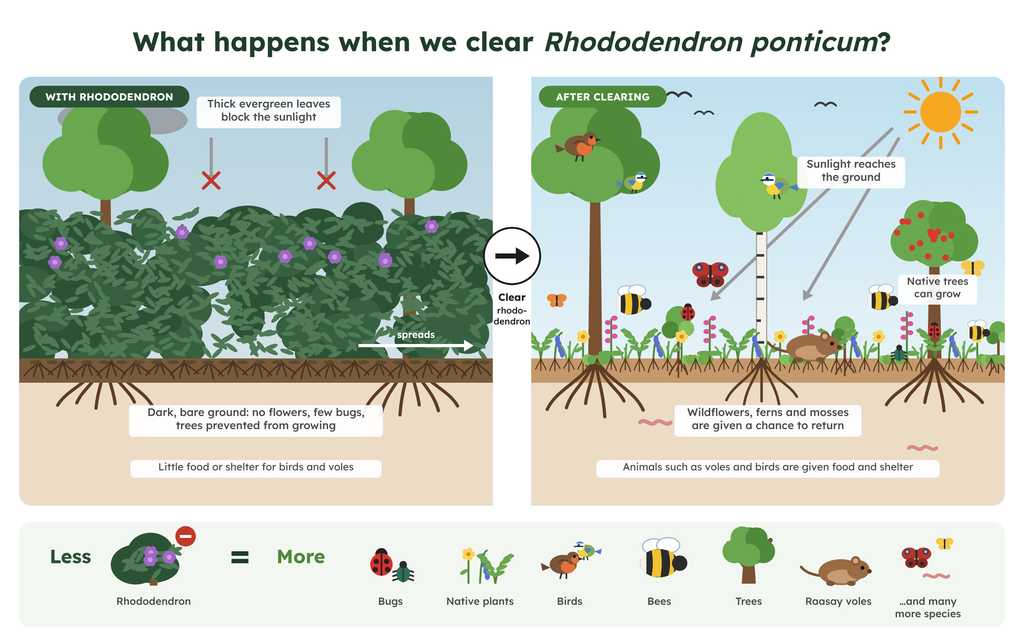
When rhododendron takes over, its dense evergreen leaves block out the light, so very little can grow underneath. Native plants are smothered, wildlife loses its food and shelter, and the plant itself is poisonous to livestock, humans and pets. Invasive species like rhododendron are one of the biggest drivers of nature loss and extinctions, especially on islands. The graphic shows how clearing rhododendron creates richer, more diverse and more resilient places.
Raasay’s carbon story
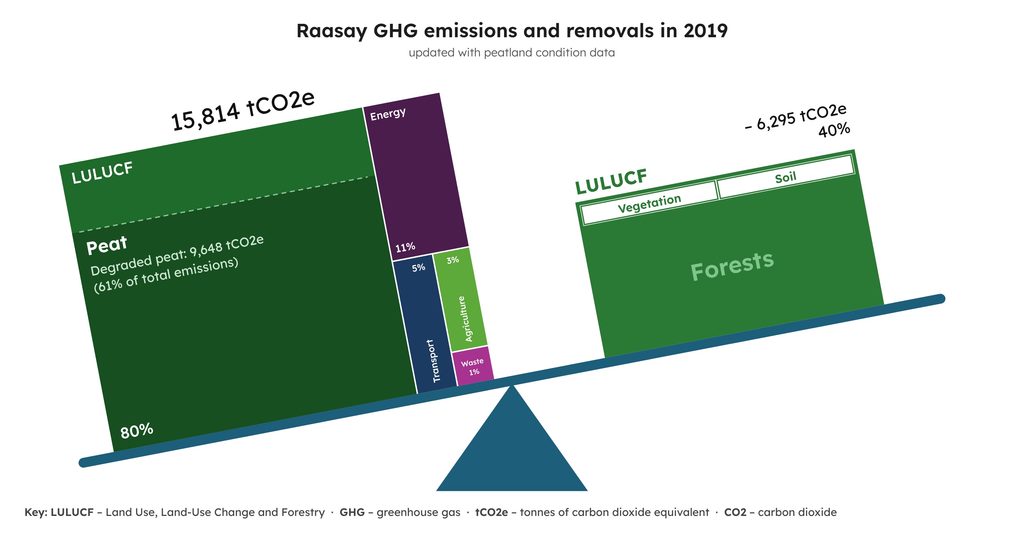
Raasay’s carbon footprint is dominated by the land. Our peatlands are like a huge bank of carbon, built up over thousands of years, but where peat is damaged that carbon leaks back into the air. Growing forests do the opposite and take carbon out of the air. Compared with our direct emissions, from things like heating and transport, these land emissions dominate Raasay’s story. The graphic below shows the island’s yearly carbon balance. On the left is everything the island gives off: the large green block is emissions from the land, mostly from damaged peat. On the right is the carbon that trees and plants take back out of the air. At the moment, our land soaks up only around 40% of what the island gives off.
Invasive plants like rhododendron are one of the greatest threats to both forests and peatlands. If Raasay is to reach net zero, this work must be done, alongside other measures. It is also the most cost-effective measure we have found: about £10 per tonne of CO₂ removed, compared with around £148 per tonne for the solar panels on the hall. The next phase of the project is expected to remove nearly 19,000 tonnes of CO₂ over the next 50 years.
Raasay Habitat Restoration
How clearing Rhododendron reduces emissions
Clearing rhododendron lets native woodland take carbon dioxide out of the air, and stops the shrub degrading Raasay’s peat, which leaks carbon when damaged. Pick a point in time to see the woodland and its carbon store grow, and tap the numbered dots to explore.
Taken out of the air over 50 years: on average about 702 tonnes a year.
1Trunks and branches
Tap the numbered red dots in the picture to explore where the carbon goes.
That’s the same as
What now?
For the next phase, the contract to tackle invasive plants was advertised locally and nationally. We received five applications, which were assessed by a panel that included an independent scorer. Four contractors have been appointed: three from the existing team, plus one new person who will travel to and stay on the island to do the work. In addition, we’re supporting one person through a trial traineeship.
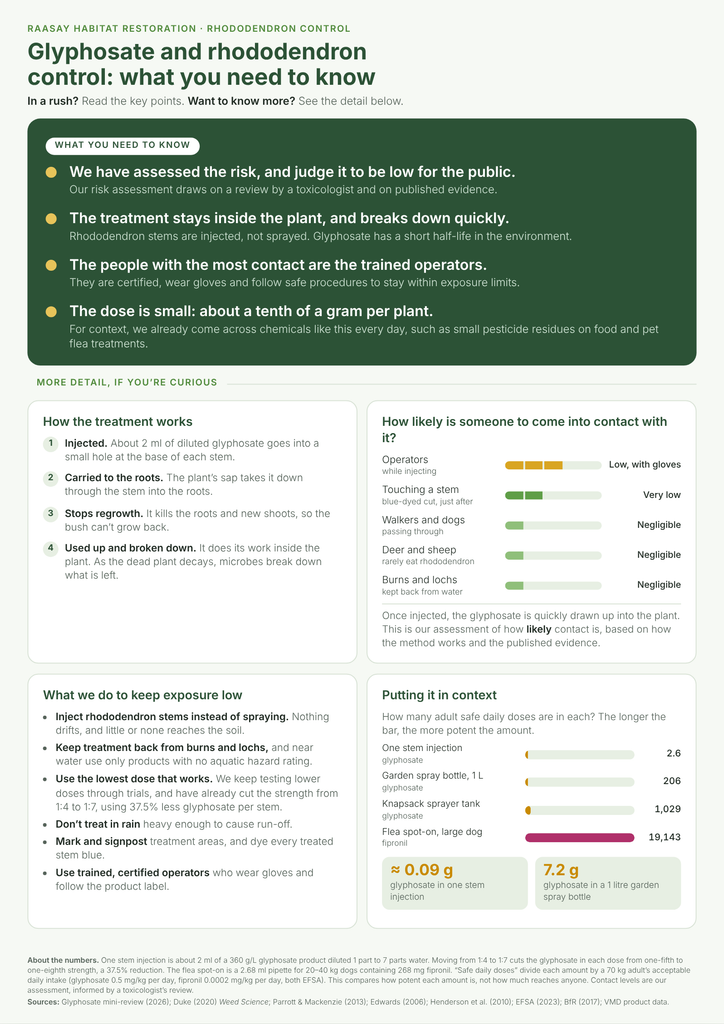
Over the coming year, work will focus on Inverarish and Suisnish as we tackle the heart of the rhododendron infestation, starting at Clachan. We’ll keep folks posted as we go. Following work with a toxicologist we have produced an updated risk assessment for the use of glyphosate. We would much rather not use any chemichals however believe it can be done safely resulting in a effective results. See below for details. In addition To better understand the impact of the project, we will:
- continue our research with our friends at Tennessee Tech University to study the impacts of this work and carbon flows on the island
- test the soil for glyphosate in areas that have been treated.
Its not all about chasing slippery invasive plants! We’ll also be doing active restoration, including planting trees and other plants. Nature works slowly, so we want to help it along. For now, thanks for your patience! We also plan to organise volunteering days to help look after the island, keep an eye out for updates.
Sources
- Estimated greenhouse gas removals, modelled using the Woodland Carbon Code, with emissions from the work itself deducted. Phase 1: 16,276 tonnes; Phase 2: 18,833 tonnes of CO₂ over 50 years. Emissions avoided by stopping rhododendron spreading onto peat are not included.
- NatureScot (2026), Scottish Action Plan for Invasive Non-Native Species 2026–2032, https://www.nature.scot/doc/scottish-action-plan-invasive-non-native-species-2026-2032
- MacLean, J.E., Mitchell, R.J., Burslem, D., Genney, D., Hall, J. and Pakeman, R.J. (2018), Seed limitation, not soil legacy effects, prevents native understory from establishing in oak woodlands in Scotland after removal of Rhododendron ponticum, Restoration Ecology 26(5): 865–872. https://doi.org/10.1111/rec.12664